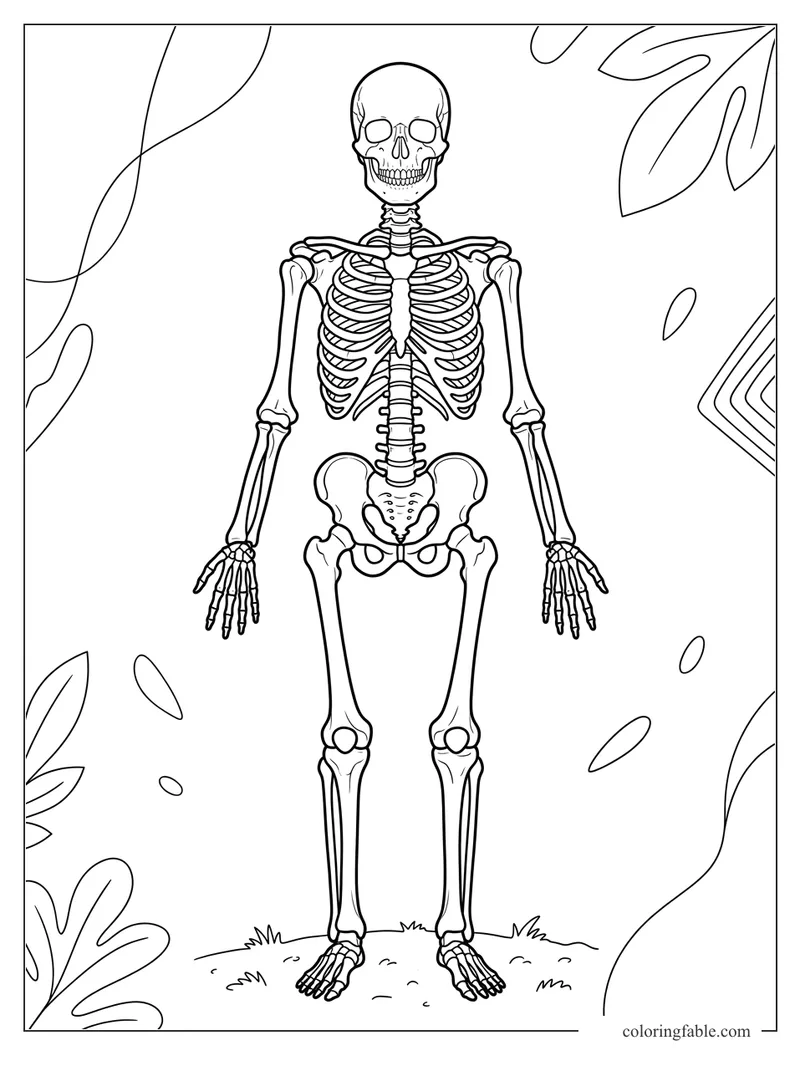
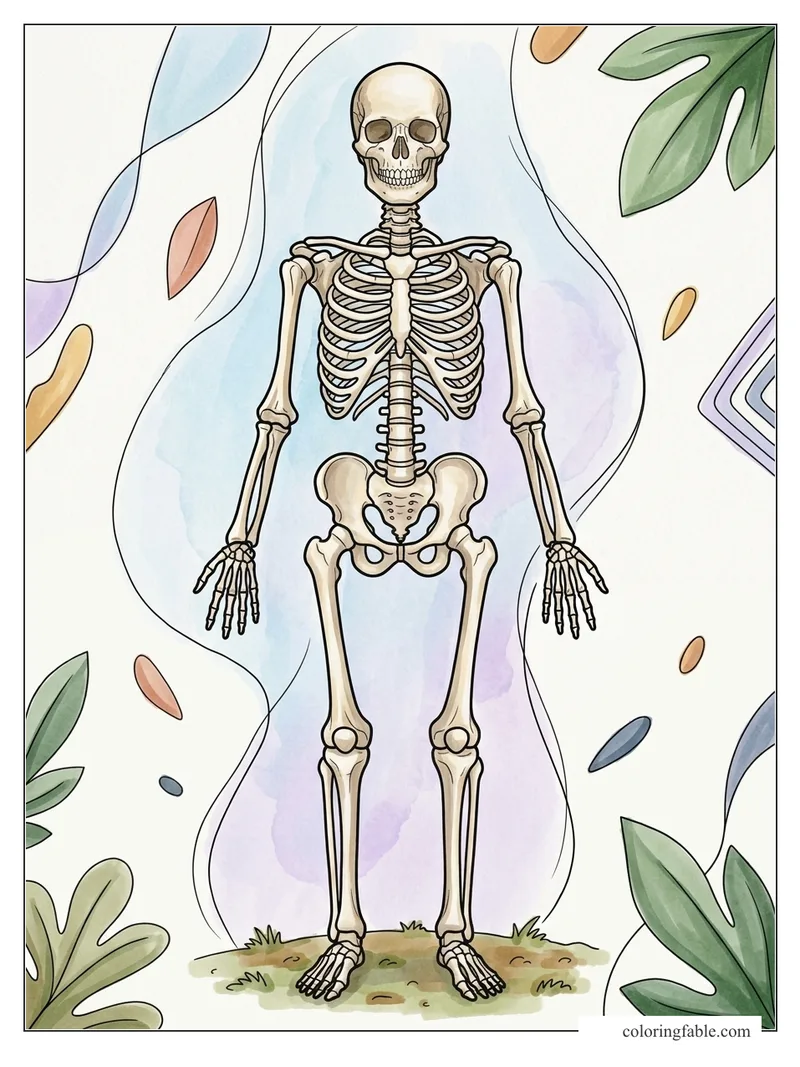
Realistic Skeleton in a Leafy Frame
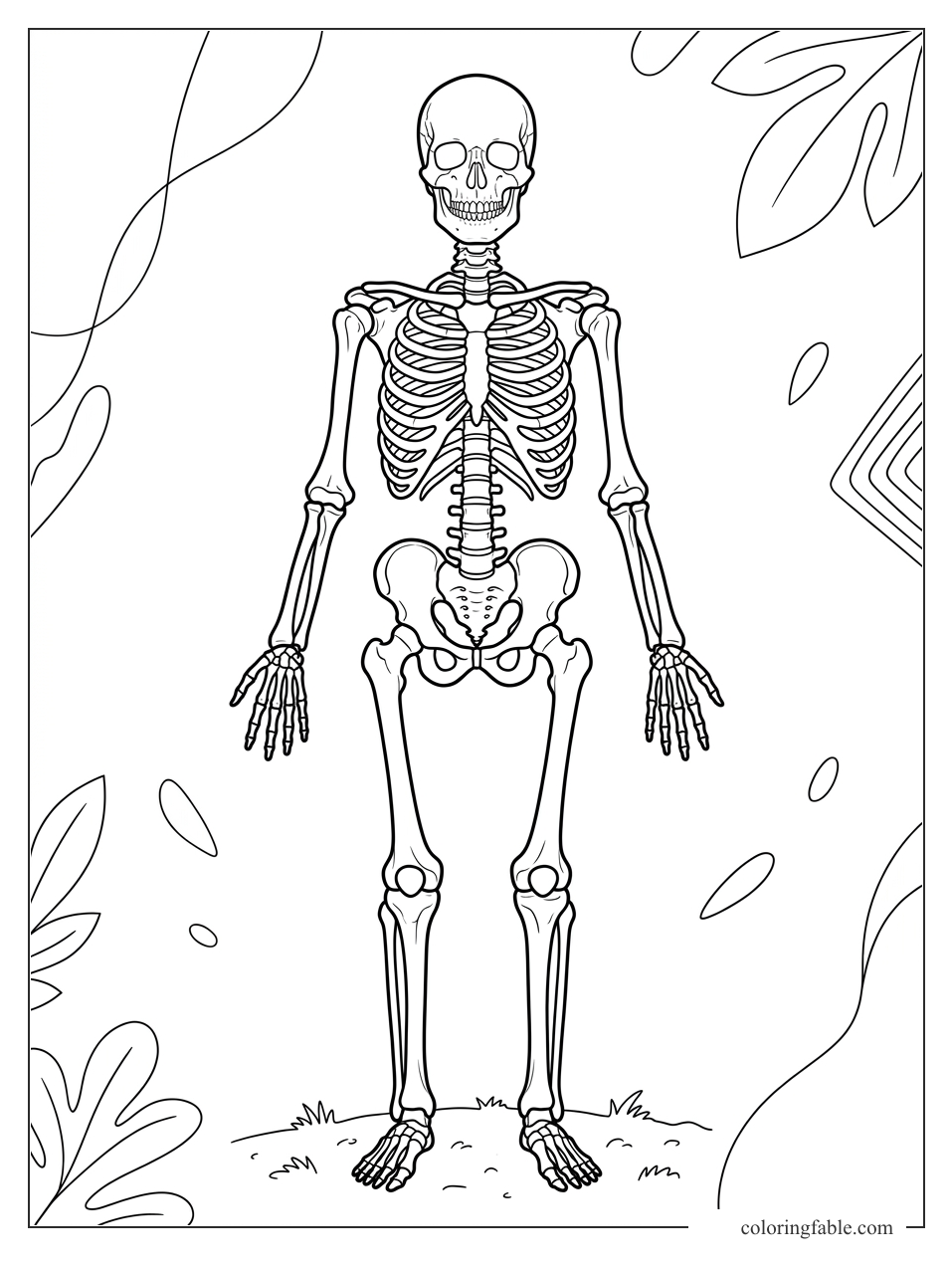
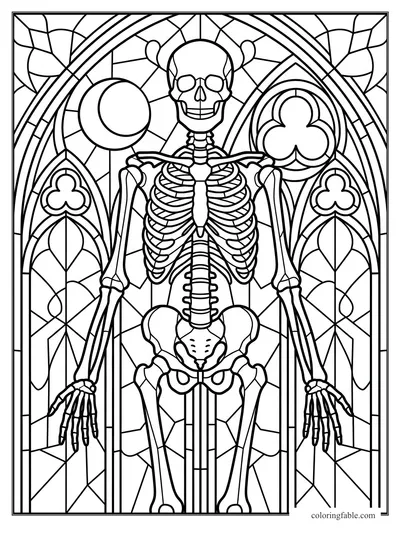
A full human skeleton stands upright on a patch of grass, framed by sweeping leaves and abstract garden shapes.
🎨 How to color it
Use bone white with soft gray shadows for the skeleton, moss green for the little grass clumps, and deep leafy green for the large border leaves. The rib cage, fingers, toes, and spine have narrow spaces, so use a sharp colored pencil and color slowly from the outside edges inward. Try adding a pale blue glow behind the skull and shoulders so the white bones stand out from the swirling plant shapes.
Jasper’s Bone Map — That wide grin and straight-as-an-arrow stance make this skeleton look ready for more than standing still. Read the full story →
That wide grin and straight-as-an-arrow stance make this skeleton look ready for more than standing still. What would you pack if your science project suddenly turned into a midnight expedition? Jasper had been dreaming of building the best “bone map” in the whole classroom, and in his dream, every rib, knuckle, and toe bone became a clue.
First, he checked the curved rib cage like it was a ladder on a pirate ship. Can you find the tiny bones in both hands? Jasper counted them twice, because one missing finger bone would send his project off course. Then he tapped the stacked spine down the center, pretending each vertebra was a stepping-stone across a canyon.
The leafy shapes around him began to sway like jungle plants, and the little grass at his feet turned into the edge of an unexplored trail. Look near the skull: can you spot the round eye openings that help give Jasper his fearless explorer face? With his project chart tucked safely in his dream, Jasper marched forward, heel bones first, ready to label every part before sunrise.